What healthy relationship boundaries actually look like (with real scripts to use)
Many people search for healthy relationship boundaries every month, and I imagine most of them are stuck in the same spot. Many folks know that boundaries matter but the moment comes to actually say the words out loud, and nothing comes out. Maybe you freeze. Maybe you say yes when you mean no. Maybe you set the boundary once, beautifully, and then quietly let it slide the second your partner looks disappointed. If this is you, I want you to know there is nothing broken in you. Boundaries are a skill, not a personality trait, and skills can be learned even if no one ever modeled them for you. In this post, I want to walk through what a healthy boundary actually is, give you real scripts for common situations, help you recognize when your boundaries are being crossed, talk honestly about why this is so hard, especially if you grew up with cultural pressure to please, and show you how to hold a boundary even when someone pushes back.
In case you are new here, I am Dama Perez, a couples therapist helping first-generation Latinas and multicultural individuals and couples build exactly this kind of boundary work, with real cultural nuance and without judgment for how hard it can feel at first.
What a healthy boundary is (and what it isn't)
A healthy boundary is a clear statement of what you need in order to feel safe, respected, and like yourself inside a relationship. It is not a punishment, a wall, or a way to control your partner's behavior. A boundary sounds like, "I need thirty minutes alone after work before I can talk about anything heavy". It does not sound like "you are not allowed to talk to me until I feel ready", which is closer to a demand or an ultimatum than a boundary.
The confusion between the two is one of the biggest reasons people avoid setting boundaries altogether. If you were taught that any kind of limit is selfish or unloving, it makes sense that the idea of saying "this does not work for me" feels almost aggressive. But a real boundary is an act of honesty. It tells your partner what you need so they are not left guessing, and it protects the relationship from the resentment that builds when needs go unspoken for too long.
Common relationship boundaries, what to say, and how to uphold them
Sometimes the hardest part is not deciding you need a boundary, it is finding the actual words in the moment. Here are a few common situations, along with language you can use and what following through on that boundary tends to look like in practice.
When your partner texts constantly during work hours
I love hearing from you, but I cannot check my phone during work hours. I will respond as soon as I am free. Upholding it looks like not answering non urgent texts until your break, even if you see a notification, and gently repeating the boundary if it keeps happening.
When your partner expects you to absorb their stress every night
I want to support you, but I need us to also talk about things that are not stressful sometimes. Can we set aside ten minutes for venting and then shift gears? Upholding it looks like naming when the conversation has gone past the agreed time and suggesting a change of topic instead of silently absorbing more.

When your partner looks through your phone
My phone is private, the same way yours is. If something is worrying you, I would rather you ask me directly. Upholding it looks like calmly restating the boundary each time it comes up, without over explaining or offering your phone to prove innocence.
When your family expects you at every gathering
I love our family time, and I also need to choose which events work for me right now. I will let you know which ones I can make. Upholding it looks like skipping an event without over apologizing and resisting the urge to justify the decision repeatedly.
When your parents pull you into mediating their conflicts
I love you both, but I can't take on the role of mediator between you. My role is to be your son/daughter, not to manage or resolve conflicts in your relationship. If you'd like my support, let's set aside a specific time later this week to talk, rather than asking me to step into the middle of it right now. Upholding this boundary means honoring your role in the family, setting a clear time if you choose to offer support, and resisting the pressure to become the fixer the moment you're asked.
When your partner raises their voice during a disagreement
I want to work through this with you, but I cannot continue if voices are raised. I am going to step away and we can come back to this in twenty minutes when we can have a conversation without elevated voices. Upholding it looks like actually leaving the room when voices rise, even if your partner asks you to stay, and returning to the conversation once things have calmed.
Notice that each of these scripts states the need clearly, without over apologizing or building an elaborate case for why you deserve to have the need in the first place. That directness feels uncomfortable at first, especially if you learned to earn permission before expressing a need, but it becomes easier with repetition.
Signs your boundaries are being crossed
Sometimes it is hard to identify a boundary violation at the moment, especially if it happens gradually.
The physical and emotional signals you might miss
A few signals worth paying attention to include feeling a tightness or dread before a conversation you already know is coming, noticing you rehearse justifications for needs you have not even stated yet, or realizing you have stopped mentioning certain topics altogether because they always lead to conflict. If you find yourself apologizing constantly for things that do not require an apology, or if you feel responsible for managing your partner's emotional reactions to your own needs, those are signs the boundary line has blurred.
The resentment that builds quietly
Resentment often shows up long before you consciously realize a boundary has been crossed. If you notice a low hum of irritation toward your partner that does not seem to match the size of what just happened, it is worth asking yourself what unspoken need might be sitting underneath it. Left unnamed, this quiet resentment tends to leak out sideways, in sarcasm, in withdrawal, or in a sudden blow-up over something small, rather than in the direct conversation it was actually asking for.
Why boundaries feel especially hard if you have an anxious attachment style
If asking for a boundary makes you brace for the relationship to end, that reaction usually has less to do with this specific request and more to do with an older fear of abandonment. Many of my clients with an anxious attachment style describe boundaries as feeling dangerous, as if any limit might be the thing that finally pushes their partner away. Naming a need can feel like handing someone a reason to leave, rather than what it actually is, an invitation to know you more accurately.
This is part of why boundary work rarely holds long term when it is only taught as a communication technique. The nervous system underneath the words has to feel safe enough to risk disappointing someone, which is often the deeper work happening alongside the scripts.
Why setting boundaries feels so hard, especially if you grew up around cultural pressure to please
For many of my clients, particularly first-generation Latinas and people raised in multicultural households, boundaries were never modeled as something healthy. Instead, love was often shown through sacrifice, availability, and putting the family or the relationship above personal needs. Saying no, even gently, could feel like a betrayal of everything you were taught love was supposed to look like.
This is not a personal failing. It is a pattern passed down, often with good intentions, from people who were taught the same thing themselves. Noticing this pattern is usually the first step toward changing it. You are allowed to honor your culture and your family while still learning a new way of relating that includes your own needs. Those two things are not in conflict, even though it can feel that way at first.
How to hold a boundary without guilt when someone pushes back
Pushback is common, especially the first several times you set a new boundary with someone used to a different version of you. This does not mean the boundary is wrong. It usually means the other person is adjusting to a new pattern. Adjustment often looks like resistance before it looks like acceptance.
When guilt shows up it's important to try to separate the discomfort of disappointing someone from the belief that you have done something wrong. Discomfort is not the same as harm. It can help to remind yourself of the actual need behind the boundary, not just the boundary itself, since it is easier to hold firm when you remember why the limit matters. If your partner reacts with anger or guilt tripping repeatedly, that pattern itself is worth bringing into a session, since consistent resistance to reasonable boundaries often points to a deeper dynamic that benefits from outside support. If unspoken resentment has already built up around boundaries that were crossed for a long time before you started naming them, that is also exactly the kind of rupture I help couples work through in therapy to heal trust issues.
You don't have to navigate healthy relationship boundaries alone
Learning to set boundaries after a lifetime of not having them modeled is genuinely difficult work, and it makes complete sense if it feels unfamiliar or even a little frightening. You are not too sensitive, too demanding, or too much for wanting to be considered in your own relationship. You are simply learning a skill that many of us were never taught.
If you are in the Irvine area and ready to build this skill for yourself, I would love to help. You can learn more about working together at therapy in Irvine, California. I also work with clients across Los Angeles and Santa Ana who are doing this same work.
You deserve a relationship where your needs are part of the conversation, not an afterthought. Book your consultation today.

Hi, I´m Dama Pérez
Licensed Marriage and Family Therapist, Certified Grief Educator, and founder of CASA Therapy.
I'm trained in Emotion Focused Therapy for both couples and individuals. I firmly believe that love can be healing when both people are willing to do the work.
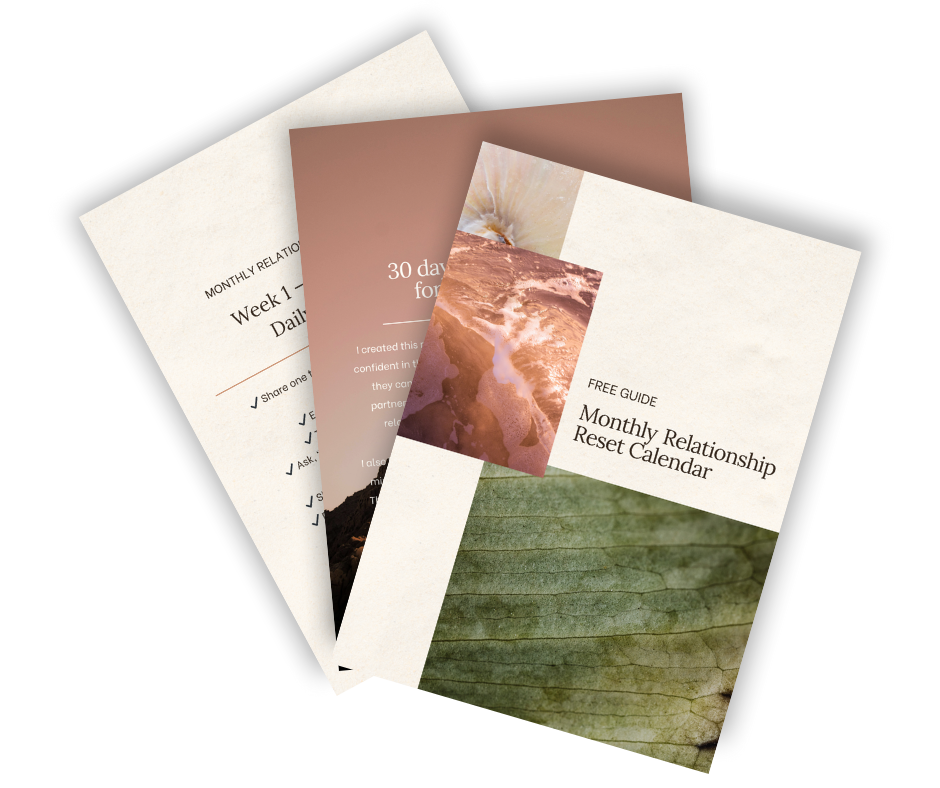
Download my free guide