Relationship anxiety: is it fear talking, or is something wrong?
Experiencing relationship anxiety can make even a good, stable relationship feel like it is constantly on the verge of falling apart. It can also make it genuinely hard to tell the difference between anxiety and a real red flag, which is one of the most exhausting parts of all.
In this post, I'll walk you through what relationship anxiety looks like in ordinary daily moments, how to tell it apart from genuinely real sensations, where it tends to come from, and what actually helps when it shows up.
In case you are new here, I am Dama Perez, a couples therapist helping first-generation Latinas and multicultural individuals and couples untangle exactly this kind of anxious pattern with real cultural nuance. I understand what it is like to have been taught that vigilance is love and I know how much relief there can be in finally learning the difference between fear and truth.
What relationship anxiety looks like in everyday moments
Relationship anxiety rarely announces itself as a single dramatic moment. It usually shows up in small, ordinary ones that quietly add up over the course of a day.
The delayed text spiral
It is the way your stomach drops when your partner takes longer than usual to respond to a text, even though you know, logically, they are probably just in a meeting. It is rereading a message five times looking for a tone that might not even be there, or drafting and deleting your own reply until it sounds appropriately casual.
When a small disagreement becomes proof of something bigger
It is the internal spiral that starts after a completely normal disagreement about weekend plans, where a small moment about scheduling suddenly becomes proof that they are pulling away. The disagreement itself is forgotten almost immediately. What lingers is the fear it seemed to confirm.
Constant scanning for your partner's mood
For many of my clients, especially those who grew up feeling responsible for managing everyone else's emotions, relationship anxiety also shows up as constant scanning. You walk into the room already reading your partner's face, trying to figure out their mood before they have said a word, bracing for something to be wrong.

Apologizing for things that need no apology
You might notice yourself apologizing for things that do not need an apology, or over explaining a simple choice because you are terrified of being misunderstood. None of this means you are dramatic or too much. It means your nervous system has learned to treat uncertainty as danger, and it is working overtime to protect you from being hurt again.
Relationship anxiety or not in love? How to tell the difference when you can't stop questioning it
This is one of the questions I hear most often. This can be an exhausting process if you've been navigating these questions internally for weeks. Relationship anxiety and falling out of love can feel remarkably similar on the surface, because both involve doubt. The difference tends to live in the details.
Relationship anxiety usually comes with intrusive, repetitive questioning that does not actually respond to reassurance. You ask your partner if they still love you, they say yes, and you feel better for about twenty minutes before the doubt creeps back in. The doubt is not really about them. It is about your own fear of loss or abandonment playing on a loop.
Not being in love tends to feel different. It is often quieter and steadier, less like panic and more like a slow, consistent absence of desire to be close to this person. There is less urgency to fix it and more of a settled sense of distance. If you notice you actually feel relief when your partner is away, or that you have stopped wanting to share good news with them specifically, that is a different signal than the anxious spiral of needing constant reassurance. Neither answer is something to figure out alone at 2am. Both deserve real, unhurried attention.
This same doubt can also show up after a relationship has already ended, which surprises a lot of clients. You may have left a relationship that felt one sided, and now you lie awake wondering if you gave up too soon, whether love is simply supposed to be this hard, whether the ending was somehow your fault. That is not proof you made the wrong choice. Choosing yourself after a relationship stops feeling mutual is an act of courage not failure, even when your nervous system keeps replaying the what ifs long after the decision has already been made.
Relationship anxiety or gut feeling? Learning to trust yourself when something feels off
If you grew up in a household where your instincts were dismissed, or where love came with unpredictability, it makes sense that you would have a hard time knowing which internal alarm to listen to.
Here is a distinction I often offer clients. A gut feeling tends to be specific and tied to something you can actually name, a pattern of behavior, an inconsistency in what someone says versus what they do, a boundary that keeps getting crossed. Relationship anxiety tends to be broader and less tethered to evidence. It attaches itself to almost anything, a delayed reply, a shift in tone, a memory of a past relationship that ended badly. If you find that your worry moves from one thing to the next without ever settling, even when each individual concern gets addressed, that pattern points more toward anxiety than intuition. This is not about ignoring your gut. It is about learning to tell your gut apart from your fear, which is exactly the kind of work that happens in therapy.
Where relationship anxiety usually comes from
It often has roots in earlier experiences of love feeling unpredictable, whether that was in a previous relationship where trust was broken, or in a family system where affection was inconsistent or conditional. If you grew up watching relationships around you involve silence, sacrifice, or sudden rupture, your body may have learned early that love requires vigilance to stay safe.
Cultural expectations can add another layer here. Many of my clients, particularly first-generation Latinas and multicultural individuals, were taught that loyalty and endurance are what love looks like, even when something feels wrong. That teaching can make it especially hard to distinguish your own anxious patterns from valid concern, because you were never given permission to name discomfort in the first place. Attachment style plays a role too. If your early relationships taught you that closeness could disappear without warning, your nervous system may now treat even small distances as a threat, regardless of what is actually happening in front of you. If this sounds familiar, it may be worth reading more about anxious attachment style, since relationship anxiety and anxious attachment often feed each other in a loop that is hard to see from the inside.
If the anxiety you are describing is specific to a marriage rather than dating or a newer relationship, the dynamics can look a little different, often tangled up with shared finances, family expectations, or years of accumulated pursuit and withdrawal. I go into that version of this pattern in more depth in anxiety in marriage.
How to cope when the anxiety shows up mid-conversation, mid-argument, or at 2am
You do not need to wait for therapy to start building small moments of steadiness, though therapy tends to make this work far more sustainable. When you notice the anxious spiral starting mid-conversation, try naming it out loud to yourself first silently before reacting. Something as simple as noticing, this is the anxiety talking, not necessarily the truth, can create just enough space to respond instead of react.
During an argument, the instinct is often to either shut down completely or push harder for immediate reassurance. Both are understandable, and both tend to escalate things further. A grounding practice here is to ask for a short pause rather than resolution in the moment, giving your nervous system time to settle before you try to talk through the actual issue.
At 2am, when the spiral tends to feel loudest, it can help to physically write down the specific fear rather than let it circle endlessly in your head. Ask yourself what evidence actually supports this fear, separate from the feeling itself. This does not erase the anxiety, but it interrupts the loop enough to get you through the night, and it gives you concrete material to bring into a session.
Signs it's time to bring this into therapy instead of white-knuckling it alone
A few honest signals tend to mean this deserves more support than willpower alone:
- You find yourself needing reassurance so often that it is straining the relationship, even when your partner keeps giving it.
- The anxious thoughts are affecting your sleep, your focus at work, or your ability to be present in the rest of your life.
- You notice you are shrinking yourself: avoiding honest conversations, softening your needs, or constantly over apologizing to keep the peace.
- You have started rehearsing conversations in your head long before they happen, trying to control an outcome you cannot actually control.
- A part of you already suspects the anxiety is bigger than this relationship, and has shown up in past ones too.
You do not need to hit a breaking point before reaching out. In fact, the earlier you address these patterns, the less entrenched they become.
Living with relationship anxiety can feel isolating, you do not have to manage it alone
You might look calm on the outside while running through worst case scenarios internally, exhausted from a kind of vigilance no one else can see. That exhaustion is real, and it deserves real support, not just another article telling you to breathe through it. I offer specialized anxiety therapy and couples therapy for exactly this kind of relational worry, using an approach that is emotionally focused, culturally rooted, and grief informed. Together we work to understand where the anxiety comes from, separate it from your actual intuition, and build a felt sense of safety that does not depend on constant reassurance from someone else.
If you are in the Irvine area and recognize yourself in these patterns, you can learn more about working together at therapy in Irvine, California. I also support clients across Southern California, including Los Angeles and Santa Ana, navigating exactly this kind of internal tug of war.
You deserve a relationship where your nervous system can finally rest, not one where you are constantly bracing for impact. Book your consultation today.

Hi, I´m Dama Pérez
Licensed Marriage and Family Therapist, Certified Grief Educator, and founder of CASA Therapy.
I'm trained in Emotion Focused Therapy for both couples and individuals. I firmly believe that love can be healing when both people are willing to do the work.
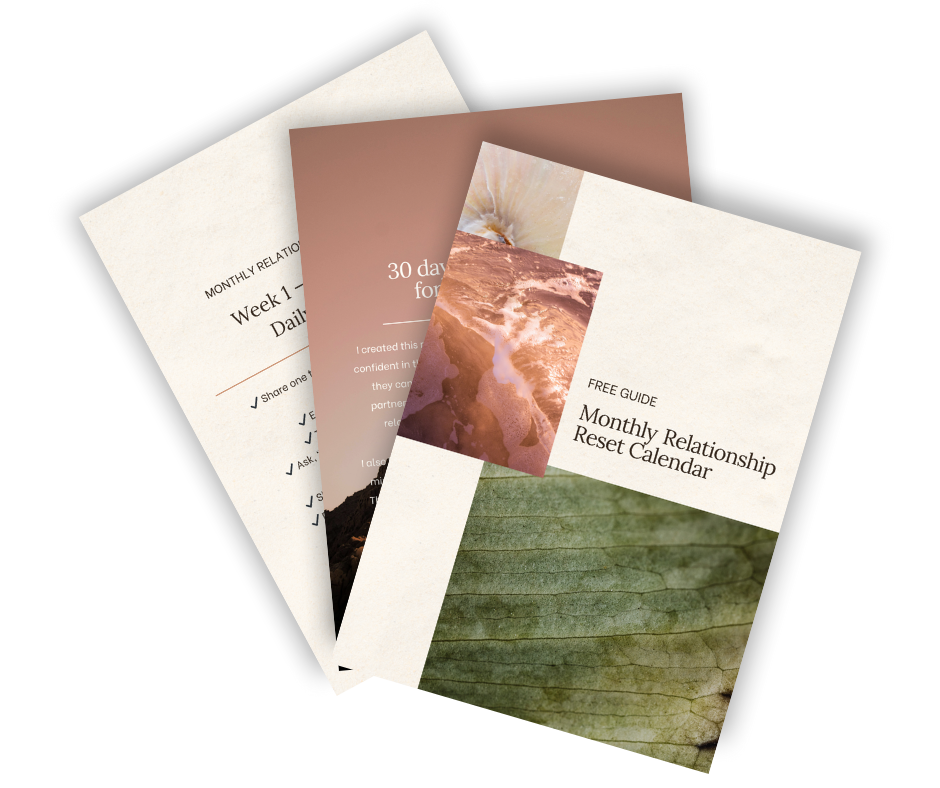
Download my free guide